

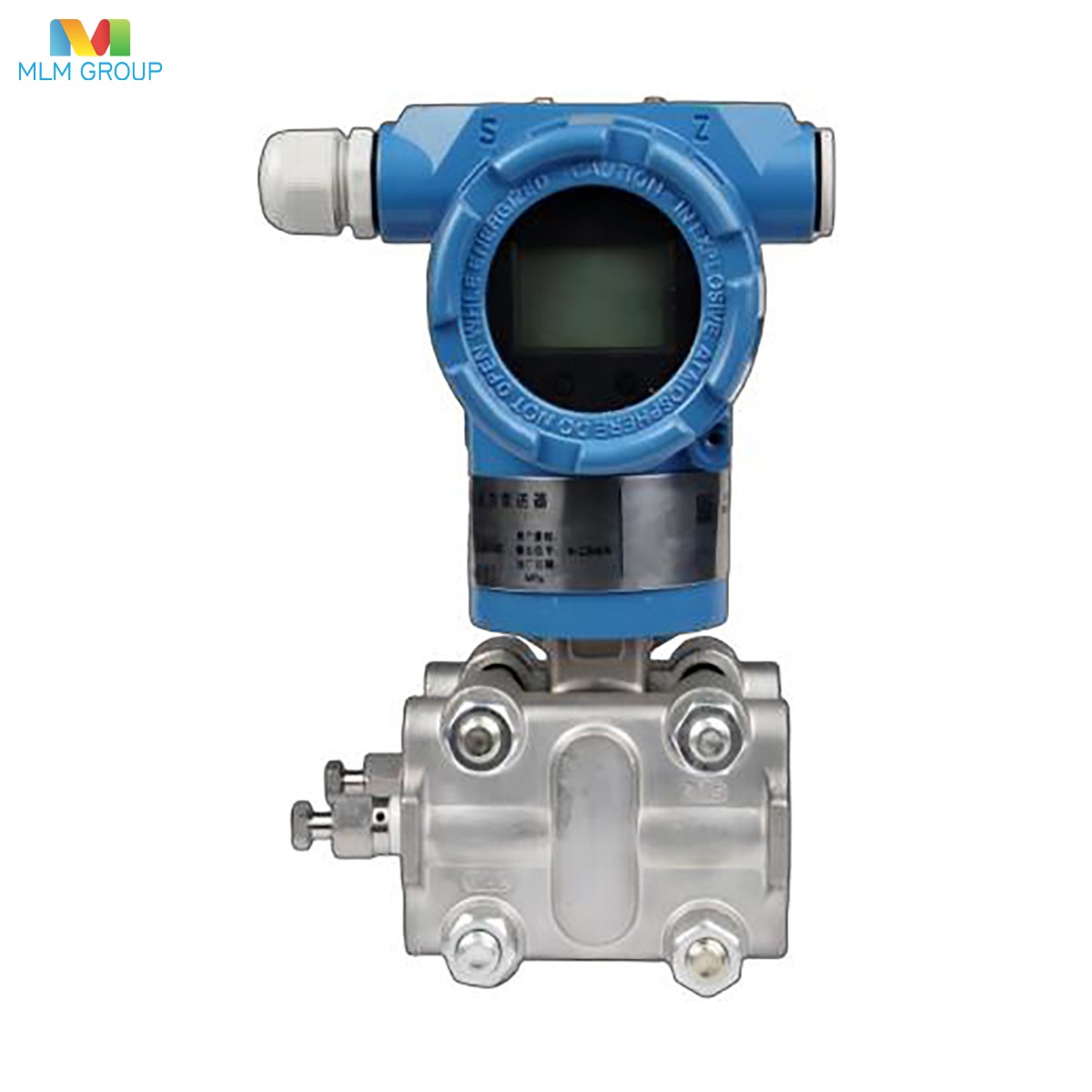
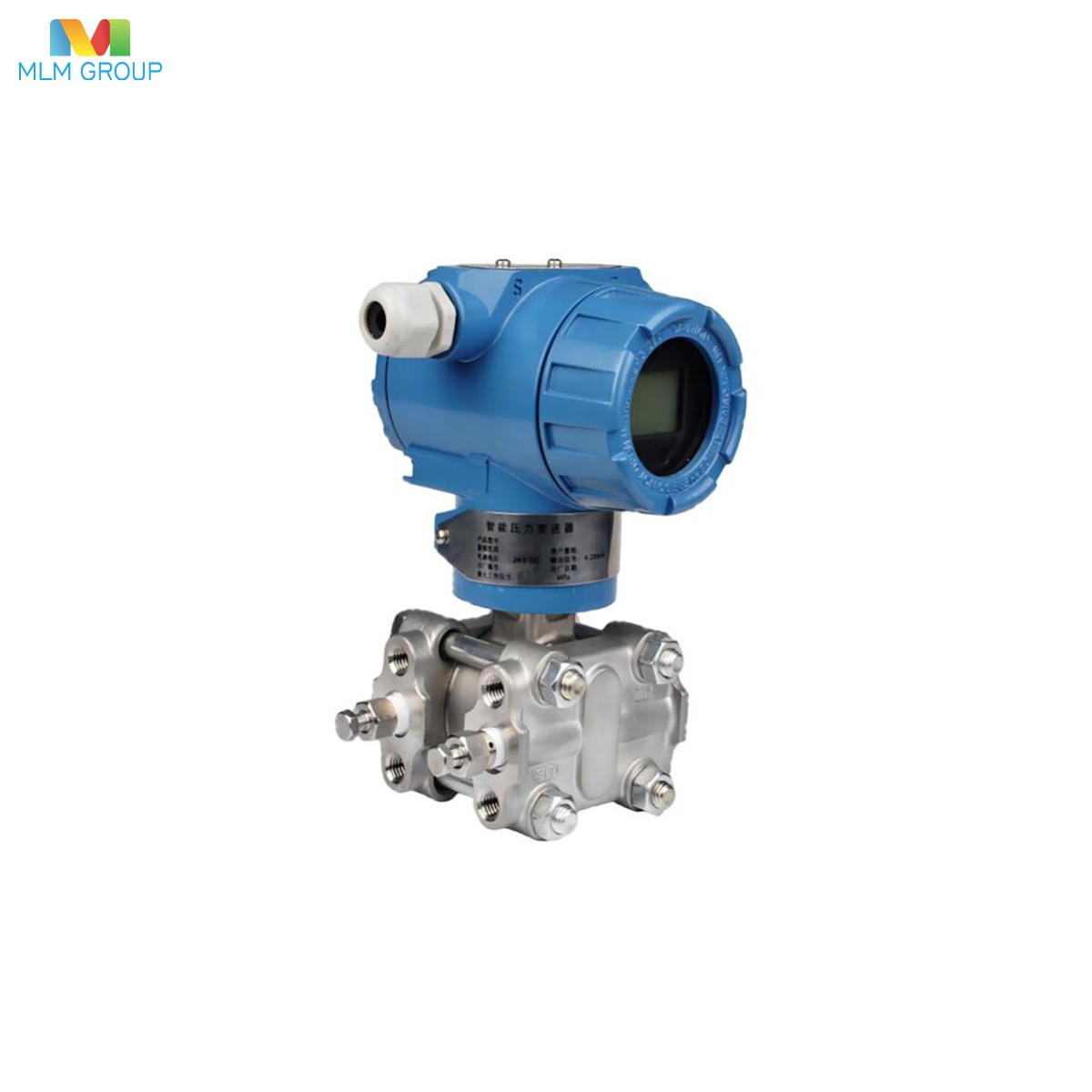
PM5600DP Series Differential Pressure Transmitter
|
|


Model Selection Precautions
● When the process connection is 1/2 “- 14NPT female thread, the factory will equip it with an elliptical flange made of 316 material.
● When using differential pressure sensors with ranges of 6kPa and 1kPa for pressure measurement, the measured pressure is connected to the H side, and the L side is equipped with a stainless steel silencing plug to prevent the impact of instantaneous changes in ambient air pressure on the measurement.
● The factory accuracy of the differential pressure transmitter is 0.05%, and it is equipped with the HART communication protocol as standard.
● For oxygen applications, the SK option should be selected, and the isolation fluid should be filled with fluorine oil. The operating temperature should not exceed 60℃ , and the operating pressure should not exceed 5MPa.
● When the flameproof option is selected, a 304 blind plug is provided as standard, and the explosion – proof metal cable gland needs to be selected as an option.
● The standard pressure – resistance class is PN160.
● When filling with fluorine oil, the ambient temperature ranges from – 10℃ to 60℃.
● The standard seal ring is Viton. For applications involving ammonia, liquid ammonia, and organic solvents, the OM option should be selected, which uses a fully PTFE – coated silicone rubber ring (wetted material: FEP).
Structure and Working Principle
The PM5600DP type differential pressure transmitter is mainly composed of a personalized sensor component and a central processing circuit module:
The personalized sensor component mainly consists of a corrosion-resistant flexible isolation diaphragm, a sensor diaphragm chamber, an integrated high- pressure overload – resistant central diaphragm filling fluid, a high-precision differential pressure sensor, a high resolution temperature sensor, a sensor amplification circuit, and circuits for personalized information processing, compensation, and personalized storage.
The central processing circuit module mainly includes a central processing circuit, anti- electromagnetic interference components, lightning protection components, an input voltage limiting circuit, and an output circuit.
The positive pressure end of the differential pressure sensor is connected to the high-pressure (H) chamber of the sensor diaphragm chamber, and the negative pressure end is connected to the low-pressure(L) chamber of the sensor diaphragm chamber. The high-pressure overload -resistant central diaphragm is used for isolation and protection in between. The temperature sensor serves as a reference for temperature measurement and compensation of the sensor diaphragm chamber. The differential pressure of the external medium is transmitted to the single- crystal silicon chip of the differential pressure sensor through the flexible isolation diaphragms on both sides and the filling fluid (silicone oil), causing the bridge of the single- crystal silicon Chi p to become unbalanced.As a result, its resistance changes and outputs a differential voltage signal, which is proportional to the detected pressure. After passing through the sensor
amplification circuit, personalized information processing, temperature compensation, and personalized storage, the signal is output as an SPI digital signal to the central processing circuit module.
After processing and adjustment, the module outputs a standard analog signal and a digital signal to the DCS system. This design enables the arbitrary replacement of the personalized sensor component and the central processing circuit module without the need for re – calibration.
By adopting the high- pressure overload – resistant central diaphragm, when there is a sudden change in the process technology (such as pressure impact, freezing expansion and pressure increase)or incorrect operation of the three- valve group, if the pressure in the high- pressure chamber(H) or low-pressure chamber (L) of the sensor diaphragm chamber exceeds the rated range pressure of the sensor, the pressure will deform the high-pressure overload central diaphragm, making it closely adhere to the filling fluid pressure transmission channel port of the sensor diaphragm chamber. This
quickly cuts off the pressure transmission of the filing fluid, ensuring that the single-crystal silicon chip of the sensor is not broken down and damaged. It plays a role in isolating high – pressure impacts and protecting the differential pressure sensor from damage, enabling the one – way overpressure of the sensor to reach a minimum of more than 16MPa,and improving the ultra-high overpressure performance, reliability, and long- term stability of the sensor.