

Automotive Manufacturing / Titanium


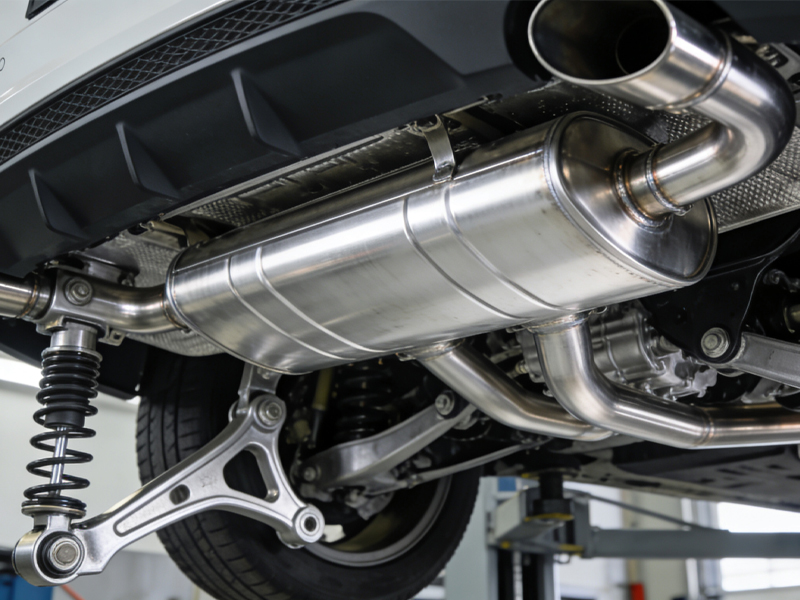
The application of titanium in automobile manufacturing is indeed a technological highlight. With its advantages of lightweight, high strength, corrosion resistance, and environmental friendliness, it is changing the performance and design of automobiles. Specifically:
I. Core Advantages
Lightweight: Titanium has a density of only 4.51 g/cm³, which is 40%-50% lighter than steel, significantly reducing the weight of a car while maintaining the same strength. For example, titanium alloy connecting rods are 15%-20% lighter than steel connecting rods, increasing engine speed and power output.
High Strength: Titanium alloys have high strength and good toughness, and can withstand high-intensity impacts. For example, titanium alloy valve seats are widely used in racing cars and sports cars, with simple shapes and low costs.
Corrosion Resistance: Titanium is stable in acidic, alkaline, and seawater environments and is not prone to rust. Compared to steel exhaust systems, titanium exhaust systems can reduce weight by approximately 40% and avoid corrosion from sulfur-containing exhaust gases.
Environmental friendliness: Titanium alloys are highly corrosion-resistant, release no harmful substances during use, and have a 100% recyclability rate, resulting in zero pollution throughout the entire process.
II. Specific Applications
Engine Systems:
Valve: Titanium alloy valves reduce weight, extend service life, and improve reliability. The United States and Japan widely use titanium alloys to manufacture intake and exhaust valves.
Connecting Rods: Titanium alloy connecting rods are most effective at reducing engine weight and significantly improving performance. Companies such as Honda, Mitsubishi, and Porsche in Japan have already used titanium connecting rods.
Valve Seats: Titanium alloy valve seats are widely used in racing cars and sports cars; they are simple in shape and inexpensive.
Crankshaft: Japan is currently prototyping titanium alloy crankshafts, but these crankshafts require anti-sticking treatment and are not yet practical.
Exhaust System:
Exhaust Pipe: Titanium exhaust pipes avoid pitting and weld corrosion problems found in stainless steel pipes, while improving fuel combustion efficiency and acceleration.
Muffler: Titanium mufflers weigh only 5-6 kg, lighter than stainless steel mufflers.
Transmission and Damping System:
Springs: Titanium alloy springs have good elastic modulus and fatigue strength, making them suitable for spring manufacturing.
Half Shafts: Titanium alloy half shafts reduce weight and improve vehicle performance.
Body Frame:
Outer Body Panels: Some automakers are experimenting with using pure titanium sheets for outer body panels to reduce weight.
III. Market Cases
Honda (Japan): Uses forged titanium connecting rods in the NSX racing car’s 3.0L 24-valve V-6 engine.
Mitsubishi Motors: Uses titanium valve spring bearings in high-capacity, four-cylinder engines.
Porsche: Uses titanium connecting rods.
Chevrolet (USA): The Corvette Z06 uses a titanium exhaust pipe.
Fuji Heavy Industries (Japan): Limited production of 440 sets of titanium alloy automotive exhaust pipes.
IV. Future Trends
With technological advancements and increasing demands for environmental protection and energy conservation, the application of titanium alloys in automobile manufacturing will become more widespread. In the future, titanium alloys are expected to achieve breakthroughs and innovations in more fields, such as in the field of new energy vehicles, where they can be used for thermal insulation of battery packs.