

Petrochemicals / Titanium


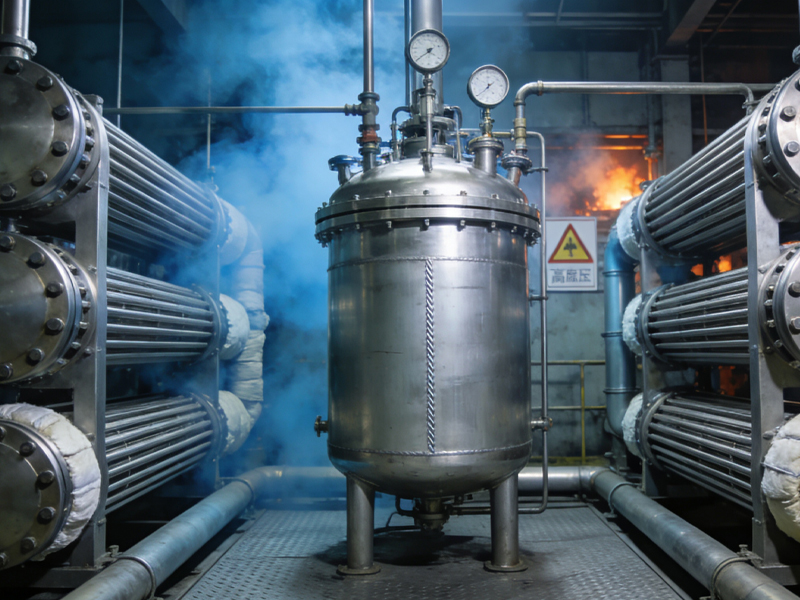
The application of titanium in the petrochemical field is indeed a technological highlight. With its advantages such as corrosion resistance, high strength, and lightweight, it has become a key material for solving equipment corrosion problems. Specifically:
I. Core Advantages
Corrosion Resistance: The dense oxide film formed on the surface of titanium resists corrosion from seawater, sulfuric acid, petrochemicals, etc., and its service life far exceeds that of stainless steel and aluminum alloys. For example, after 50 years of use in marine climates, titanium alloy components show a surface corrosion rate of less than 0.01 mm/year.
High Strength: The tensile strength of titanium alloys is 1.5-2 times that of stainless steel, and its yield strength is also significantly higher, making it suitable for withstanding high pressure and impact.
Lightweight: The density of titanium is only 57% of that of steel, which can significantly reduce the weight of equipment at the same strength, reducing lifting difficulty and construction costs.
II. Specific Applications
- Oil Casing Pipes: Used in highly corrosive gas fields, such as the Tarim Basin in Xinjiang and the high-sulfur gas fields in the Sichuan Basin, effectively solving the problem of easy corrosion of stainless steel equipment under high-temperature environments.
- Heat Exchangers: In the oil refining process, titanium and titanium alloys are the best choice to meet the challenges of high temperature, high pressure, and corrosive media due to their superior properties.
- Piping Systems: Titanium pipes remain stable in extremely harsh environments such as strong acids and alkalis, and are not easily corroded, ensuring long-term stable operation of equipment.
- Reactors: Titanium pipes can be bent, welded, and processed according to design requirements to precisely create reactor structures that meet process requirements.
III. Market Cases
- Shanghai Petrochemical General Plant: Introduced Japanese equipment on the low-temperature oxidation production line, where high-temperature washing tanks, high-temperature washing tank condensers, and high-temperature heaters all used titanium equipment, effectively solving the problem of easy corrosion of stainless steel equipment under high-temperature environments.
Adipic acid production equipment: The key equipment, the reboiler at the bottom of the nitric acid distillation tower and the secondary evaporator of nitric acid, were replaced with industrial-grade pure titanium and titanium-steel composite plates. After the modification, the equipment operated smoothly, and there was no obvious corrosion on the material surface.
IV. Future Trends With the continuous development of the petroleum industry, the requirements for the corrosion resistance and reliability of equipment will become increasingly stringent, and the application prospects of titanium alloys will be even broader. In the future, research and development of titanium alloys should be further strengthened to continuously optimize their performance and meet the growing needs of the petroleum industry.