

Aerospace / Titanium


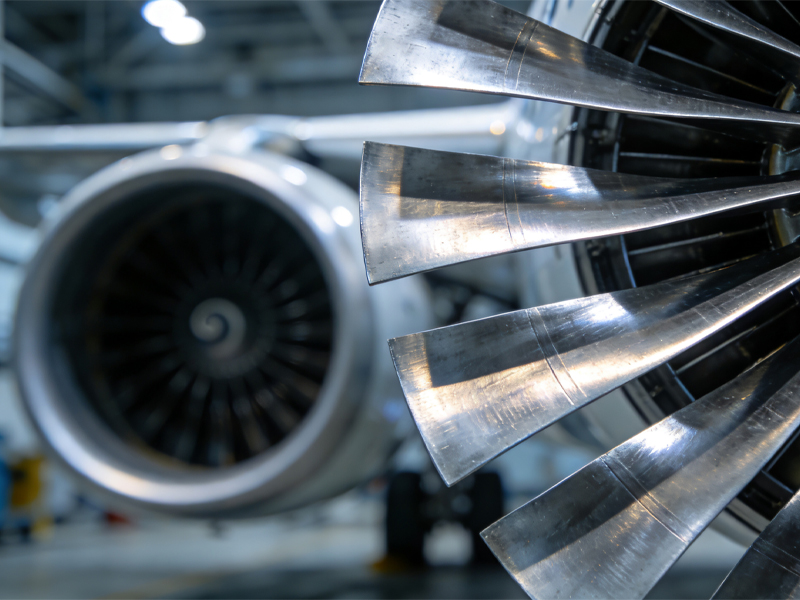
The application of titanium alloys in the aerospace field is indeed a technological highlight. With its advantages such as lightweight, high strength, corrosion resistance, and high temperature resistance, it has become a key material for manufacturing aircraft, rockets, and spacecraft. Specifically:
I. Core Advantages
Lightweight: Titanium has a density of only 4.51 g/cm³, which is 40%-50% lighter than steel. At the same strength, it can significantly reduce the weight of aircraft, reduce fuel consumption, and increase range and speed.
High Strength: Titanium alloys have high strength and good toughness, and can withstand high-intensity impacts. For example, titanium alloy engine blades can remain stable during supersonic flight.
Corrosion Resistance: The dense oxide film formed on the surface of titanium can resist corrosion from seawater, acids, and alkalis, extending the life of aircraft.
High Temperature Resistance: Titanium alloys can maintain strength in high-temperature environments, making them suitable for high-temperature components such as engines and turbine blades.
II. Specific Applications
Aircraft Manufacturing:
Engines: Titanium alloys are used to manufacture components such as fan discs, compressor discs, blades, and casings.
Fuselage Structure: Titanium alloys are used to manufacture load-bearing components such as beams, bulkheads, and skin.
Fasteners: Titanium alloy fasteners (such as bolts and screws) are widely used in aircraft structures.
Spacecraft Manufacturing:
Fuel Tanks: Titanium alloys are used to manufacture fuel tanks for rockets and satellites, reducing weight.
Pressure Vessels: Titanium alloys are used to manufacture high-pressure gas cylinders and propulsion nozzle support shells.
Instrument Straps: Titanium alloys are used to manufacture instrument straps and frames.
III. Market Cases
US F-22 Fighter Jet: Titanium alloys account for 41% of the aircraft’s weight, used in the manufacture of fuselage structures and engine components.
Boeing 747 Passenger Jet: Titanium alloys account for over 3640 kg of the aircraft’s weight, representing 28% of the total weight. China’s J-20 fighter jet uses 20%-30% titanium alloy, primarily for manufacturing fuselage structures and engine components.
IV. Future Trends
With technological advancements, the application of titanium alloys in the aerospace field will become even more widespread. In the future, titanium alloys are expected to achieve breakthroughs in more areas, such as:
3D Printing Technology: Manufacturing complex titanium alloy parts using 3D printing technology to improve production efficiency.
New Alloy Development: Developing higher-strength, more corrosion-resistant titanium alloys to meet the needs of the aerospace industry.