

Building & Energy / Titanium


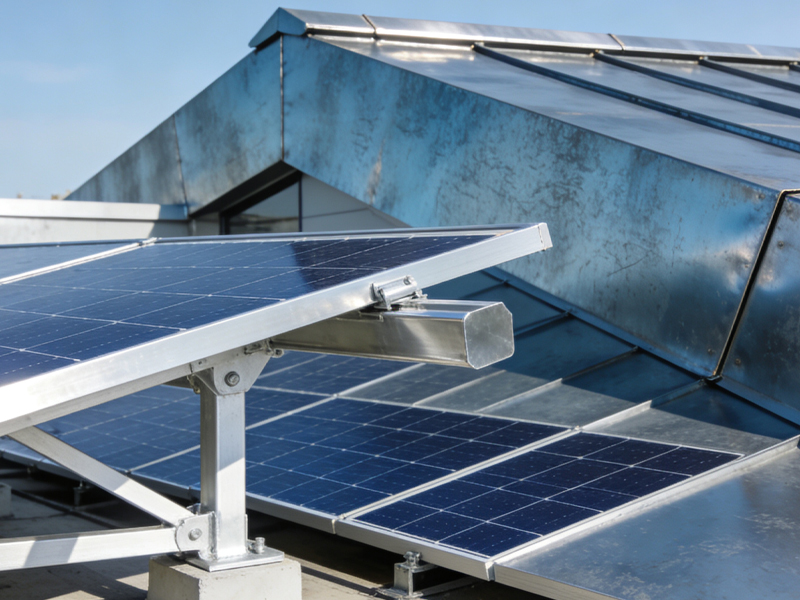
The application of titanium in the building energy sector is indeed a technological highlight. With its advantages of being lightweight yet strong, corrosion-resistant, having controllable color, and being environmentally friendly, it is changing the energy efficiency and design aesthetics of buildings. Specifically:
I. Core Advantages
Lightweight and High-Strength: Titanium has a density of only 4.51 g/cm³, which is 40%-50% lighter than steel. At the same strength, it can reduce the building’s self-weight by 70%-75%, reducing lifting difficulty and enhancing seismic performance. For example, after adopting titanium alloy frames in coastal buildings in Japan, the structural stability increased by 30%, and the foundation construction cost decreased.
Corrosion Resistance and Long-Lasting Performance: Titanium forms a dense oxide film in oxidizing and neutral media, and its corrosion resistance, especially in seawater, far exceeds that of stainless steel and aluminum alloys. Japanese research shows that titanium alloy roofing, after 50 years of use in marine climates, has a surface corrosion rate of less than 0.01 mm/year, and a service life of over 100 years.
Controllable Color: Through anodizing technology, titanium surfaces can display a rich range of colors from golden yellow to blue-purple, with the color varying naturally with the thickness of the oxide film. Etching processes can create intricate relief patterns on the titanium surface, giving building facades dynamic textures.
Green and Environmentally Friendly: Titanium alloys are highly corrosion-resistant, do not release harmful substances during use, and have a 100% recyclability rate, resulting in zero pollution throughout the entire process. Its total life-cycle cost is lower than stainless steel, with significant advantages, especially in corrosive environments.
II. Specific Applications
Building Facades: Titanium panels can be anodized to display a variety of colors (such as gold, blue, and purple), and the colors are generated by the oxide film itself, making them resistant to fading. For example, the walls and roof of the Guggenheim Museum in Bilbao, Spain, are covered with titanium panels, showcasing a unique metallic luster and extraordinary charm. Thermal Insulation: Titanium insulation materials are widely used in the construction industry for insulation of walls, roofs, and floors, providing long-lasting insulation, effectively reducing energy consumption, and improving building energy efficiency. Furthermore, titanium insulation materials have excellent waterproof and fireproof properties, further enhancing the safety and reliability of buildings.
Extreme Environment Engineering: Titanium alloys perform exceptionally well in extreme environments such as coastal buildings and industrial facilities. For example, Abu Dhabi Airport in the UAE uses hundreds of tons of titanium alloy structural components, meeting building strength requirements while reducing carbon emissions through material recycling.
Market Cases:
Guggenheim Museum, Spain: The entire wall and roof are covered with titanium panels, showcasing a unique metallic luster and extraordinary charm.
Abu Dhabi Airport, UAE: Utilizes hundreds of tons of titanium alloy structural components, meeting building strength requirements while reducing carbon emissions through material recycling.
Japanese Coastal Buildings: Widely employ titanium alloy cladding technology, effectively resisting salt spray corrosion and reducing maintenance frequency. IV. Future Trends With technological advancements and increasing demands for environmental protection and energy conservation, titanium insulation materials will present a broader development prospect in the future. On the one hand, with continuous innovation and research and development of new material technologies, the performance of titanium insulation materials will be continuously improved and perfected. On the other hand, with people’s growing emphasis on environmental protection and sustainable development, titanium insulation materials will be more widely used and promoted due to their excellent environmental performance and energy-saving effects. In the future, titanium insulation materials are expected to achieve breakthroughs and innovations in more fields. For example, in the field of new energy vehicles, titanium insulation materials can be used in the thermal insulation treatment of battery packs; in the aerospace field, titanium insulation materials can be used in the thermal control systems of spacecraft and satellites; and in the smart home field, titanium insulation materials can be used in intelligent temperature control systems.